A personal page

I did not arrive here by a single path.

I have moved through different activities, professions and passions. Artificial intelligence did not build the thread connecting them: it allowed me to finally see it.

PersonVocationForm
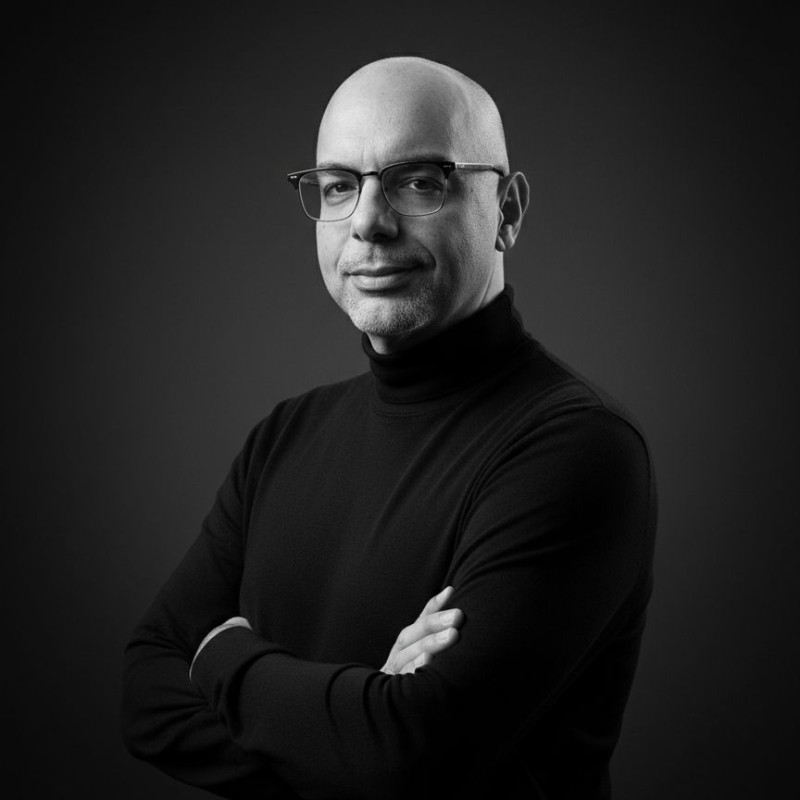
Filippo Maria Saccucci in portrait

A non-linear story

I did not arrive here by a single path.

In my life, I have moved through very different activities, professions and passions. I have worked with people, businesses, ideas, tools and systems. For a long time, these experiences could have looked like nothing more than a series of different directions.

Today I can see a continuity. I did not construct it afterwards to give myself a definition: I can finally see it.

The vocation came first

What I was already doing before AI

Before AI, I was already doing, essentially, what I continue to do today: enter a situation, listen to what it is trying to become, understand where it has stopped and translate it towards a form.

Sometimes that form was a finished piece of work; sometimes a system, a decision, a project or a clearer way of seeing the problem. The contexts changed. The function remained.

This is not about listing everything I have done. The different experiences are the rooms I have moved through; what matters is how I learned to look inside each one.

LookTranslateBring towards a form

A working environment

What AI made possible

AI did not invent me. It gave me an environment where parts of me that had worked separately for a long time could meet.

The rational, structured part of me and the intuitive, creative part found a way to collaborate. It had not always happened before; in fact, it had rarely happened at all.

For years, my life has also unfolded inside this relationship. I do not use AI only for research and development: I work with it. It has allowed me to prepare documents, tackle subjects I did not know and reach the level required in fields where I did not have adequate training.

This does not mean becoming competent automatically. It means recognizing what I do not know, understanding what I need to learn, choosing how to use the tool, checking what it gives back and knowing when my judgment must take over.

The person still makes the difference: knowing when to speak, when to stop and listen, and how to bring value.

After years of an intense relationship with AI, I began to see connections more clearly that had previously seemed impossible. Not because the machine had built a new identity in my place, but because it helped something that already existed to emerge.

Recognize a limitFormulate a questionCheck an answerKnow when to listen

People meet AI in different ways

The first threshold can be shared.

I have spoken about AI with very different people. Some had not yet started using a chatbot. Others began exploring and encountered possibilities they had never imagined. Others brought it into their work.

Even people with a very high level of expertise initially find themselves in front of the same threshold: they can try to enter, ask a question and see what happens.

At that first point of entry, we become more equal: you do not need to possess the same technical background in advance to begin asking a question.

This equality concerns the threshold, not the outcome. AI lowers some barriers, but it does not produce the same effect for everyone. It is not a manual, and there is no identical way to use it.

If there is something you want to understand, solve or build, you do not need to arrive with a perfect request.

I work through Scala Core. Behind this work, there is me: we work together directly, from beginning to end.